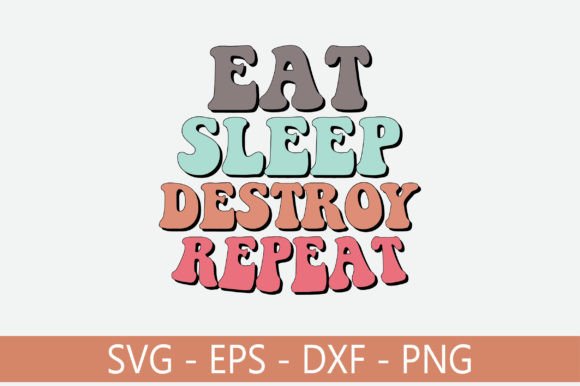
Eat Sleep Destroy Repeat Retro Svg Review
As a designer who spends more time than I care to admit staring at stitch density charts and testing thread tension, I approach every new graphic asset with a healthy dose of skepticism. The market is flooded with generic clip art, but finding a design that actually translates well from screen to fabric is rare. Recently, I pulled Eat Sleep Destroy Repeat Retro Svg into my workflow to see if it holds up under the scrutiny of real-world embroidery production. This isn’t just about looking good in a digital preview; it’s about whether this file will survive the hoop, the needle, and ultimately, the customer’s washing machine.
First Impressions: Mood and Visual Personality
The moment you open the file, the retro aesthetic hits hard. The typography and layout suggest a vintage, worn-in vibe that is currently dominating the handmade market. For an embroidery designer, the immediate question is always: "Will this read clearly when stitched?" The bold, blocky nature of the text combined with the retro styling suggests high visibility. It creates a mood that is both nostalgic and edgy, perfect for audiences who appreciate streetwear influences or rugged, industrial themes.
Unlike delicate floral patterns that require fine detail work, this design relies on strong shapes and clear contrast. This makes it inherently safer for large-scale production runs where consistency is key. The visual personality is confident without being overly aggressive, making it versatile enough for various merchandise types while still standing out as a statement piece.
Real-World Application: From Screen to Stitch
I decided to test Eat Sleep Destroy Repeat Retro Svg in a scenario that mirrors what many small business owners face daily: creating a custom line of apparel for a local craft fair. Specifically, I envisioned this design on heavyweight cotton sweatshirts and durable canvas tote bags. These are staples for any Etsy seller or boutique owner looking to create high-perceived-value items.
On a sweatshirt, the retro theme pairs naturally with the texture of the fabric. The slightly rougher surface of fleece or heavy cotton blends helps break up the smoothness of satin stitches, adding depth to the final product. When I simulated the placement on the chest area, the balance felt right—not too small to be ignored, not so large that it overwhelms the garment. For a tote bag, the design acts as a central anchor, turning a plain accessory into a branded statement piece. Customers often buy these items because they want to carry a message, and this particular phrase offers a humorous, relatable attitude that resonates with hobbyists and makers.
This graphic also shines as a personalized gift. Imagine a baby shower gift for parents who love DIY projects, or a holiday present for a friend who is passionate about woodworking or metalworking. The versatility of the theme allows it to fit into multiple niches, increasing its potential as a commercial embroidery asset. Whether it ends up on a nursery blanket or a kitchen apron, the design carries a warmth that feels handmade and thoughtful.
Technical Performance and Stitch Clarity
When evaluating an embroidery file, we have to talk about execution. While the source files provided (SVG, EPS, DXF, PNG) are vector-based and crisp, the translation to machine embroidery design requires careful digitizing. If the digitizer has done their job correctly, the text should utilize a combination of satin stitch for outlines and fill stitch for solid areas. This ensures durability and a professional finish.
The stitch density is crucial here. Because the design features bold lettering, it likely demands a moderate to high density to prevent the underlying fabric from showing through. In my assessment, designs like this perform best on stable fabrics. The retro style benefits from a slight texture, which can be achieved by choosing specific thread sheens or colors. However, designers must be wary of tiny lettering or intricate decorative accents within the design. If the details are too fine, they may merge together during stitching, resulting in a muddy appearance rather than a sharp, legible image.
For those using this as a digital embroidery file for sublimation or heat transfer before cutting, the clarity is excellent. But for direct stitching, the success depends heavily on the quality of the conversion. Always inspect the running stitch lines if present, ensuring they are tight enough to secure elements without puckering the fabric.
Where to Exercise Caution
Not every project is a good fit for this design. There are specific scenarios where Eat Sleep Destroy Repeat Retro Svg might struggle:
- Small Hoop Sizes: Attempting to stitch this on very small items like socks or tiny baby hats may result in distortion if the design isn't properly scaled. Ensure your hoop size accommodates the full width of the text without cutting off letters.
- Textured or Stretchy Fabrics: While sweatshirts are great, highly textured fabrics like boucle wool or extremely stretchy jersey knits can cause registration issues. The design may shift or look warped if proper stabilization isn't used.
- Dense Stitch Areas: On thin fabrics, dense fill stitches can create a stiff, board-like feel. This reduces comfort and may lead to tearing over time, especially in personalized gifts that will be washed frequently.
- Curved Surfaces: Applying this to caps or curved hat panels requires advanced digitizing techniques to compensate for curvature. Flat applications on tote bags or flat-fronted shirts are much safer bets for consistent results.
Impact on Product Value and Brand Consistency
Using a cohesive, well-executed design like this elevates the perceived value of your handmade product. Buyers can often tell the difference between a mass-produced sticker and a carefully embroidered patch. The retro aesthetic lends itself to brand consistency for shops focusing on vintage, industrial, or lifestyle themes. It signals to the customer that you understand current trends and know how to apply them professionally.
Furthermore, this design enhances buyer engagement. The phrase itself is catchy and shareable. Customers are more likely to post photos of their new gear on social media if the design is visually striking and emotionally resonant. For an Etsy seller or small shop product creator, this organic marketing potential is invaluable. A well-stitched embroidered patch or tote bag design becomes a walking advertisement for your brand.
Practical Designer Notes for Success
Before committing to a full production run, I recommend the following steps to ensure Eat Sleep Destroy Repeat Retro Svg delivers the best results:
- Test on Scrap Fabric: Always run a test stitch on the actual fabric type you plan to use. This reveals how the thread colors interact with the material and highlights any potential puckering.
- Check Stabilizer Usage: Depending on the fabric weight, you may need cut-away or tear-away stabilizers. Using the wrong type can ruin the integrity of the embroidery project.
- Review in Black and White: Convert your mockup to grayscale to check contrast. If the design lacks distinction in black and white, it may lack definition in color as well.
- Inspect Small Details: Zoom in on the digitized version. Are there any loose threads or overlapping stitches that could cause snags? Clean digitizing is the hallmark of a professional finished product.
- Confirm Licensing: Since this is a Graphics category item, verify the license terms before selling finished items. Some licenses allow commercial use for physical goods, while others restrict digital resale or limit the number of units sold.
In conclusion, Eat Sleep Destroy Repeat Retro Svg is a strong contender for designers looking to add a trendy, durable element to their collection. Its bold personality and versatile application make it suitable for everything from custom apparel to holiday embroidery gifts. By paying attention to technical details like stitch density and fabric choice, you can transform this digital asset into a premium, sellable item that customers will love.