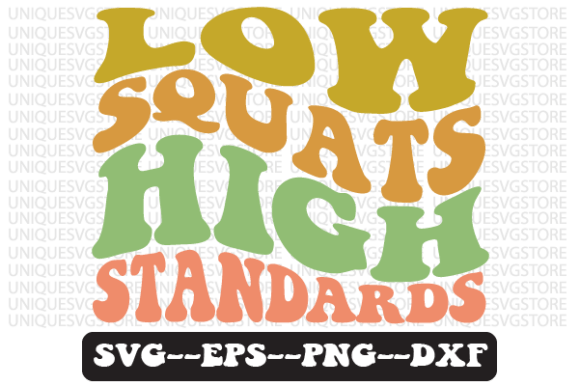
Low Squats High Standards Retro Svg Review
As a designer who spends half my life staring at stitch charts and the other half trying to convince clients that embroidery isn’t just for monograms, I approach every new digital asset with a healthy dose of skepticism. We have all seen the endless streams of generic clipart masquerading as premium design files. That is why when I came across Low Squats High Standards Retro Svg, I decided to put it through its paces before recommending it to my network of craft business owners and fellow makers.
This isn’t just another trendy phrase slapped onto a vector; it is a piece of graphic design that demands specific consideration if you want it to translate well from screen to fabric. The product description highlights its versatility as a Groovy Retro svg Design suitable for sublimation and print, but my focus here is strictly on how this machine embroidery design holds up in real-world application. Whether you are an Etsy seller looking to expand your catalog or a hobbyist making a personalized gift, understanding the nuances of this file is crucial for producing a high-quality finished product.
First Impressions: Mood and Visual Personality
The moment you load Low Squats High Standards Retro Svg into your digitizing software or design mockup tool, the retro vibe hits you immediately. It captures that specific 70s aesthetic without feeling dated or cluttered. For designers, the immediate question is always: "Will this read clearly after stitching?"
The layout is bold, relying on strong typography and likely some decorative elements that define the "groovy" style. This kind of design naturally belongs on items that can handle a bit of visual weight. It screams casual comfort. It fits perfectly into the current market trends for custom apparel that blends humor with nostalgia. Unlike delicate floral patterns that require fine detail work, this design has a confident presence. It tells the wearer something about their attitude before they even speak. That kind of statement piece is exactly what drives engagement in craft business listings because it connects emotionally with the buyer.
Real-World Application: Where Does It Shine?
I recently simulated using this design for a boutique client project involving a line of unisex hoodies and canvas tote bags. Here is how Low Squats High Standards Retro Svg performed in those scenarios.
- Sweatshirt Embroidery: This is arguably the strongest use case. The thick cotton fleece of a hoodie provides the perfect stabilizer-like backing for the stitches. The retro theme pairs exceptionally well with the relaxed fit of a sweatshirt. When placed on the chest or centered on the back, the design anchors the garment beautifully. It elevates a basic blank into a small shop product that feels curated and intentional.
- Tote Bag Design: Canvas is forgiving, but it can be thin. If you are using this as a tote bag design, you must be mindful of the hoop size. A large placement works best here. The durability of the canvas means it can withstand the tension of hooping better than delicate fabrics, making it a safe bet for beginners and pros alike.
- Baby Embroidery: While the phrase might seem edgy for infants, the retro font style softens the blow. Think of it as a playful gift for parents who appreciate irony. On a onesie or a baby blanket, the contrast of the groovy colors against soft pastels creates a striking visual. However, keep the placement away from sensitive areas like the neck seam.
- Embroidered Patch: Converting this into a detachable patch is a smart move for commercial embroidery projects. Patches allow customers to customize jackets, caps, or backpacks themselves. The bold lines of the embroidery file translate very well to the bordered look of a patch, adding value to your design assets.
Technical Considerations and Stitch Performance
Not every graphic translates seamlessly into thread. With Low Squats High Standards Retro Svg, there are specific technical factors you need to evaluate before running a full production run.
Stitch Density and Clarity: Retro designs often rely on solid fills or thick outlines. You need to check the stitch density in your software. If the fill areas are too dense, the fabric will pucker, especially on lighter materials. Conversely, if the lines are too thin, they may disappear into the texture of the fabric. I recommend inspecting the small details closely. If the design includes tiny text or intricate curves, ensure your machine can handle the precision. A running stitch outline might be necessary to define edges that could otherwise bleed together.
Fabric Texture and Thread Colors: The success of this project hinges on contrast. On dark fabric, you will need a bright, contrasting thread color to make the retro hues pop. On light fabric, darker threads provide a classic look. Always test your thread colors on scrap pieces of the actual fabric you plan to use. The texture of the fabric plays a huge role; a smooth polyester blend will show crisp lines, while a rough burlap or heavy denim might obscure fine details.
Hoop Size Constraints: Be realistic about your equipment. If the design is large, you need a machine with a sufficient hoop size. Trying to embroider a wide graphic on a small hoop requires complex splitting, which can leave visible seams. If the design exceeds your standard hoop, consider breaking it into sections or choosing a smaller placement area, such as the left chest rather than a full-front print.
Where to Use It Carefully
There are certain products where Low Squats High Standards Retro Svg might struggle. Avoid using this on stretchy spandex blends unless you are using a heavy-duty stabilizer, as the elasticity can distort the stitching over time. Thin fabrics, like silk or lightweight rayon, are risky because the needle penetration can cause puckering or tearing. Additionally, curved surfaces like baseball caps require careful positioning. The flat front of a cap is ideal, but wrapping the design around the curve can lead to distortion in the lettering.
Also, consider the end-user experience. Products that require frequent washing, such as kitchen towels or aprons, need robust stitching. If the satin stitch borders are not tight enough, the design may fray after several laundry cycles. Always advise your customers on proper care instructions to maintain the integrity of the finished product.
Final Verdict for Designers and Sellers
From a professional standpoint, Low Squats High Standards Retro Svg is a versatile and visually appealing addition to any digital embroidery file library. It bridges the gap between graphic art and textile craft effectively. Its retro charm makes it highly marketable for holiday embroidery collections, summer fashion lines, and personalized gifts.
For creative entrepreneurs and makers, the key to success lies in execution. Do not just upload the file and hope for the best. Test it thoroughly. Check the stabilizer choice. Mock it up in black and white to ensure readability. Confirm whether your licensing allows for commercial use of the printable mockup images you create for your store.
When done right, this design does more than just decorate fabric; it adds personality and value. It transforms a simple handmade product into a statement piece that customers are proud to wear or display. If you are looking to add a touch of groovy flair to your apparel decorator services or craft fair products, this is a solid choice. Just remember, the difference between a good embroidery job and a great one is often found in the preparation. Treat this design with the respect it deserves, and it will reward you with beautiful, sellable results.